
During retirement, your goal should be to smooth out your retirement income allowing you to maintain a level tax rate.
Here is why:
- It allows you to budget better as the years go by
- You also actually end up with more money in your pocket and less for the CRA
- It helps you to avoid being subject to things like OAS clawback
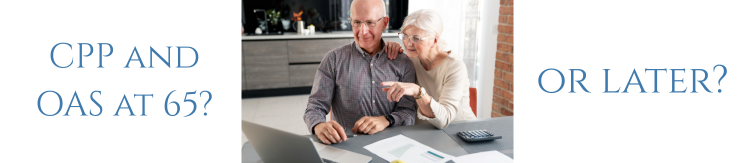
A crucial part of income smoothing is deciding when to apply for CPP. This decision should be made in conjunction with converting your RRSP to a Registered Income Fund (RIF) to avoid slipping into a higher tax bracket.
If your income is lower in retirement, you have a large RRSP, and you are relatively healthy, consider converting it to a RIF before the age of 71, withdrawing more than the minimum, and delaying your CPP. The advantages of withdrawing more than the minimum are:
- RIF withdrawals allow pension income splitting
- RIF withdrawals are not subject to withdrawal fees
- RIF withdrawals qualify for a $2000 pension income tax credit if over 65
Melting down your RIF before age 72 and delaying CPP helps to keep your income from moving up to the next tax bracket and gives you a better chance of avoiding OAS claw back. By the time you decide to take CPP at 70, the value of your RIF could easily be lower due to the higher withdrawals. This strategy increases the number of low-income meltdown years, resulting in less taxes paid.
Hence the smoothing out effect.
Lastly, waiting until age 70 to take CPP could mean getting hundreds of dollars more per month. Consider delaying your OAS at the same time!
DELAYING CPP + EARLY RIF WITHDRAWALS = LESS TAXES + HIGHER CPP LATER
Don’t make your CPP decision without talking to me first because making the wrong decision could lead to giving more of your retirement income to the CRA.
Meet with me to review your situation and how best to proceed.